

Dachshund Dog Car Seats



- Featured
- Most relevant
- Best selling
- Alphabetically, A-Z
- Alphabetically, Z-A
- Price, low to high
- Price, high to low
- Date, old to new
- Date, new to old
Seats That Let a Long Back Lie Flat
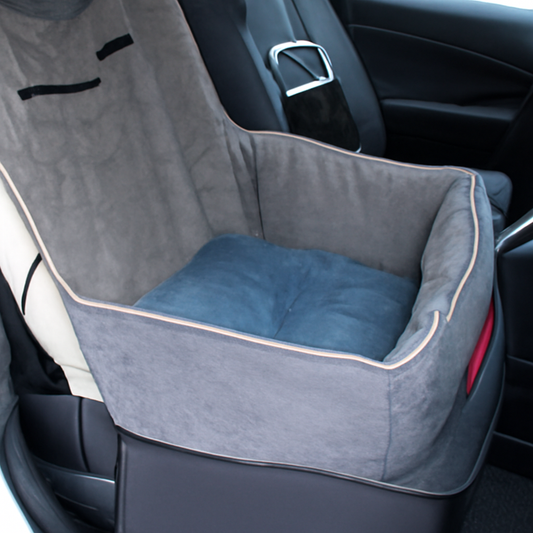
Dachshunds are long and low, and many owners prefer a seat where their dog can lie flat rather than sit upright. Miniatures usually weigh about 4.5 to 5kg and standards about 9 to 12kg, so this page focuses on low sided boosters, roomy car seat beds and a back seat extender.
Length Matters More Than Weight
Measure your Dachshund lying on their side, from nose to base of tail, and add about 5cm. Choose a seat with at least that much inside length, then check the weight limit. A long seat that fits flat will often suit a Dachshund better than a deep, upright booster.
| Dachshund | Typical weight | Good choice |
|---|---|---|
| Miniature | about 4.5 to 5kg | Small booster or travel bed rated up to 8 to 10kg |
| Standard | about 9 to 12kg | Car seat bed or booster rated up to 12 to 14kg |
| Any size, long trips | any | Back seat extender so your dog can stretch out |
Not sure of the size? Enter your dog's weight and length and see the seats that fit, with live stock.
Size calculatorProtect That Back
Low entry
Lift your Dachshund in and out rather than letting them jump, to spare the spine.
Firm base
A firm, flat base supports the back better than a soft, sagging one.
Short tether
Keep the tether short enough that your dog cannot leap out of the seat.
Always use a harness. Highway Code Rule 57 says dogs should be suitably restrained so they cannot distract you or be hurt if you stop quickly. Clip the seat tether to a car harness, never a collar. Our seats are for comfort and containment and are not crash tested.
See all small dog car seats and our dog car beds.
Dachshund Seat Questions
Is a booster or a bed the better Dachshund car seat?
Many Dachshunds prefer a bed or a long, low booster where they can lie flat. Measure length first.
Should I lift my Dachshund into the car?
Yes. Lifting with one hand under the chest and one under the back end avoids a jump that can strain the spine.